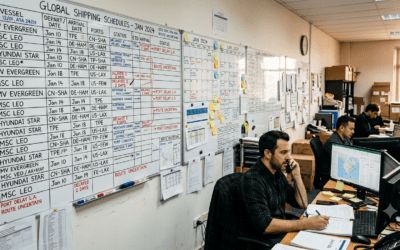

At first glance, early 2026 looked like it might bring a rebound for global shipping. Instead, what we’re seeing is something far more complicated—and far more important for shippers to understand. Blank sailings are rising. Schedule reliability remains shaky. And regulators are stepping in more aggressively than we’ve seen in years. Individually, all these considerations might be manageable, but together, we’re looking at more ocean freight disruptions. And these issues are reshaping how exporters and importers need to think about risk, planning, and cost control in the months ahead.
Demand Is Softer than Expected, and Carriers are Responding
The traditional pre-Lunar New Year rush didn’t show up this year the way carriers expected. Instead of a surge, demand softened quickly. Blank sailings jumped significantly, rising from 57 in January to 107 in February, as carriers pulled capacity from the market. Those kinds of numbers aren’t just a tactical adjustment; they’re a signal that:
- US demand is cooling.
- Inventory levels are stabilizing (or even stagnating).
- Carriers are facing overcapacity in key trade lanes.
When supply outweighs demand, carriers don’t quietly accept lower margins; they actively manage capacity. That means fewer sailings, reshuffled networks, and reduced frequency.
And here’s the part that often gets overlooked: Blank sailings don’t just affect imports. They have a direct impact on exports. When a sailing is canceled, that vessel isn’t available for outbound cargo either. Exporters suddenly face:
- fewer booking options
- longer wait times
- greater competition for space
While headlines may focus on import volumes, exporters are feeling the squeeze just as much, if not more.
Reliability Still Isn’t Reliable
If fewer sailings were the only issue, shippers could adapt. But the second ongoing freight disruption is even more frustrating: unpredictability. Container line schedule reliability dropped again in December 2025, landing at just 62.8%. That means nearly four out of every 10 vessels have not been arriving on schedule.
Even among top carriers, only a handful improved month over month, and many have remained stuck in the 50–70% reliability range. While that’s technically an improvement year over year, it’s far from a dependable statistic.
For shippers, this creates a ripple effect:
- Production schedules become harder to align.
- Inventory planning requires larger buffers.
- Downstream commitments become riskier.
To put it simply, companies can no longer trust when shipments will arrive, which affects the overall business continuity.
When Systems Break Down, Costs Go Up
Here’s where things get even more interesting—and more costly. When carriers cancel sailings and struggle with reliability, the entire system becomes less efficient. And inefficiency has a price tag. We’re seeing that play out in multiple ways:
- Increased demurrage and detention exposure.
- Higher reliance on expedited freight.
- More working capital tied up in inventory buffers.
Now, because of the ongoing freight disruptions, regulators are paying closer attention to how those costs are being applied.
Regulators Are No Longer Sitting on the Sidelines
In one of the most significant enforcement actions in recent years, the Federal Maritime Commission (FMC) issued a $22.67M penalty against Mediterranean Shipping Company (MSC). The violations spanned multiple years and included:
- Billing parties who had no role in cargo movement.
- Failing to properly publish tariff terms.
- Systematically overcharging customers for certain container types.
One particularly notable finding is that approximately 23% of certain invoices contained overcharges. Regulators noted that such a percentage classifies as an “unreasonable practice,” not just a billing error.
This case sends a clear message: The era of “that’s just how shipping works” is ending. Regulators are becoming more aggressive, especially when it comes to demurrage and detention practices, billing transparency, and carrier accountability.
What This Means for Shippers
Taken together, these developments point to a clear shift in market dynamics:
- Demand is softening.
- Capacity is being reduced.
- Reliability is inconsistent.
- Regulatory scrutiny is increasing.
That combination creates a new operating environment, one where flexibility and visibility matter more than ever. In response, leading shippers are already adjusting their strategies by:
Building More Flexibility into Routing
With blank sailings on the rise, relying on a single carrier or lane is riskier than ever. Diversification isn’t just smart; it’s becoming essential.
Planning for Delays
Instead of assuming on-time arrivals, companies are building realistic lead times into their planning models.
Scrutinizing Charges More Closely
With regulators cracking down, now is the time to audit invoices, question unexpected fees, and ensure tariff transparency. Because if the FMC is paying attention, you should be too.
Investing in Visibility
The companies navigating this environment best aren’t guessing; they’re tracking. Real-time visibility tools and proactive communication are helping shippers respond faster when disruptions occur.
Better Navigate Ocean Freight Disruptions
In today’s market, one single ocean freight disruption doesn’t stand out. Instead, several are converging, including:
- Reduced demand leading to blank sailings.
- Persistent reliability challenges.
- Increased regulatory enforcement.
For businesses that rely on the global shipping market, a clear strategy is needed. What we’re seeing is that capacity is tighter than it looks, schedules are less predictable than they should be, and costs are under greater scrutiny than ever before. But shippers who adapt by building flexibility, improving visibility, and staying informed aren’t just surviving this environment, they’re gaining a competitive edge.
Need a partner to support your shipping needs? Contact Cyclone Shipping to learn more.